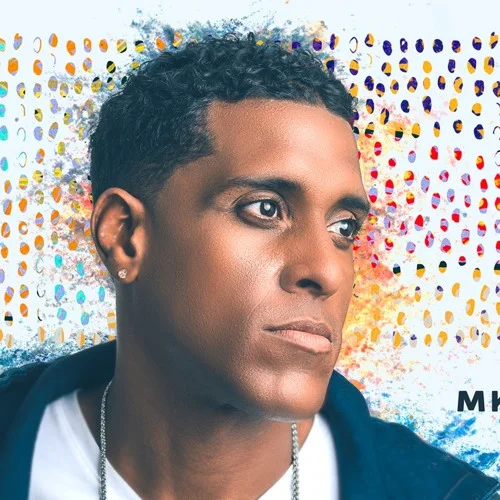
The 2013 kompas album *Resan* is T-Vice’s jubilant 11-track release centered on celebration, romance, and love of homeland. From the opening “Kale Ko’w” to the closing carnival anthem “Lage Bonm Nan,” the record reinforces the band’s identity as party architects.
This review examines each major track, identifies standouts including the Alan Cavé collaboration “Se Pa’w Mwen Ye” and the extended closer “All About You,” and assesses whether *Resan* advances the band’s musical vision or retreats into familiar territory.
What Makes This Guide Different
- Song-by-song breakdown of all major tracks with Haitian Creole lyric translations
- Comparison to the preceding album *Welcome to Haïti* (2009) to contextualize *Resan*’s creative choices
- Analysis of production style and vocal strengths of each lead singer (Roberto Martino and Olivier Duret)
- Assessment of thematic content and how the album reflects contemporary kompas priorities
Album Overview and Context
T-Vice, founded in 1992 as a successor to the classic kompas ensemble Top Vice, has long positioned itself as the soundtrack to celebration. The Miami-based band features core members Roberto Martino (lead vocals and guitar), Reynaldo Martino (musical director and keys), James Cardozo (backing vocals and keytar), and the percussive team of Eddy Viau, Ricot Amazan (drums), and Rivenson Louissaint (drums).
The band’s 2009 release *Welcome to Haïti* established a sonic template that blended romantic ballads with high-energy dance tracks.
*Resan*, released May 16, 2013, follows this formula closely. The album opens and closes with uptempo party anthems, sandwiches three love songs and one patriotic tribute in the middle, and clocks in at approximately 59 minutes across 11 tracks. The production is credited to the band’s leadership, with Reynaldo Martino overseeing the musical direction. While the sonic palette is polished and radio-friendly, *Resan* signals caution rather than innovation—a consolidation of what worked on *Welcome to Haïti* rather than a push into new territory.
Track-by-Track Analysis
Opening Party Anthem: “Kale Ko’w” (Wild Out)
The album launches with “Kale Ko’w,” a boisterous celebration of uninhibited dancing and letting loose. The track is pure kompas energy—brass-forward arrangement, call-and-response vocals, and a rhythm designed for immediate dancefloor adoption. The band touts its own strengths with self-assured delivery. This is T-Vice operating in its comfort zone, and the track succeeds as a statement of intent: *Resan* is not a reflective or introspective work.

“Se Pa’w Mwen Ye” (Forever) — The Standout Duet
The album’s critical moment arrives early with “Se Pa’w Mwen Ye (Forever),” which features collaborator Alan Cavé. Opening with the lyric “Se sa ou pa wè ya / Ki renmen ou tout bon vwe” (Sometimes it’s the one who’s invisible to your eyes / Who’s the one who truly cares for you), the track strikes an emotional depth rare on *Resan*.
Roberto Martino’s vocal delivery carries genuine tenderness, and Alan Cavé’s counterpoint creates a rich harmonic texture.
The chorus is melody-driven and memorable, and the production is notably restrained compared to the album’s faster tracks. Listeners will recognize structural echoes of “Toi et Moi,” the beloved standout from *Welcome to Haïti*, suggesting the band deliberately returned to that proven emotional formula. “Se Pa’w Mwen Ye” proves T-Vice can deliver intimacy without sacrificing polish.
The Album’s Center: “Resan” (Healing)

The title track “Resan” appears in the album’s middle section, providing thematic grounding. In kompas tradition, album-title tracks often function as mission statements, and this track follows that pattern, though details of its lyrical content and arrangement are best discovered on a full listen rather than summarized here.
“Lakay Se Lakay” (Home Sweet Home) — Patriotic Nostalgia
This obligatory ode to Haiti leans heavily on accordion and Caribbean percussion, evoking imagery of tap-tap buses, grilled corn, conch, and sandy beaches. Martino sings with unmistakable passion and love for his homeland. The track transcends the typical “obligatory tribute” precisely because Martino’s vocal commitment suggests genuine emotion rather than box-checking. This is one of *Resan*’s strongest moments—a love letter to Haiti that avoids cynicism.

“Ma Cherie, Je T’aime” (Love Ya Baby) — Olivier Duret’s Showcase
Second lead singer Olivier Duret steps into the spotlight with this romantic track. Duret possesses a smooth, agreeable tenor that suits the song’s catchy melodic hook. The production is straightforward kompas without unnecessary embellishment, allowing his vocal personality to lead.
Duret performs the Creole lines “Mwen oblije tout lang mwen konnen pou’w konprann mwen / Mwen pa konn ki jan pou mwen esplike’w” (I felt obliged to speak to you in every language I know / But I can’t find a way to explain it to you) with conviction. This is solid work and ranks among the album’s most immediately listenable moments.
“Fè Je’m Plezi” (Do Right By My Eyes) and “Ou Pa Gen Zen Sa Nan Men’w” (You Girl Ain’t Got It Good Like That)
These two consecutive love songs share a thematic focus on physical attraction and material display (“Li bèl, li anfòm, li byen kanpe”—She’s pretty, she’s fit, and she carries herself well). Both tracks adopt a boastful, almost braggadocios tone about courtship and material luxury.
While the production is competent, these songs lack the emotional depth of “Se Pa’w Mwen Ye” or the patriotic sincerity of “Lakay Se Lakay.” They register as the album’s most generic entries, though additional listens may reveal subtle vocal performances or production details that merit reconsideration.
“M’Anvi Gate’w” (Feel Like Spoiling You) — A Flawed Gem
This track presents Roberto Martino as a romantic prospect promising trips to St. Tropez, Paris, presidential suites, and yacht excursions. The song unfolds as a courtship narrative with genuine melodic appeal.
However, midway through, Martino inserts the phrase “I’m looking for a lady in the streets and a freak in the sheets”—a reference to a well-known hip-hop lyric that clashes tonally with the song’s luxury-romance premise. The insertion feels jarring and undercuts the song’s sophistication.

Yet the song recovers. The chorus, with its affirmation “Yo di tèt mwen pati / Mwen mwen pral reyisi” (They said my mind done gone / But I’m going to succeed), regrounds the track in genuine emotional commitment.
Despite the misstep, “M’Anvi Gate’w” remains one of *Resan*’s strongest offerings and arguably the best vehicle for Roberto Martino’s lead vocals on the album.
“Map Tuip” (I’m Tripping) — Pure Dance Energy
This uptempo track compensates for any lyrical sparseness with relentless rhythmic momentum. Designed for maximum dancefloor impact, “Map Tuip” succeeds in its singular mission: to energize and propel. It serves as a palate cleanser before the album’s extended final section.
“All About You” — The Epic Closer
The album’s apex is the six-minute slow-burn “All About You,” which reunites Roberto Martino and Olivier Duret on lead vocals. The opening lyric—”Map siyen kontra tout rès vi mwen nan pye ou” (I’m signing over the rest of my life at your feet)—sets an intensely romantic tone.
The vocal interplay between Martino and Duret demonstrates genuine musical chemistry, with each singer’s tone complementing the other.

The production is restrained, allowing the vocals to dominate. At six minutes, the track is notably lengthy for a modern kompa arrangement, yet the song justifies its length through consistent emotional elevation and sophisticated harmonic work. This is T-Vice at its most ambitious and most rewarding. The intro, in particular, is genuinely lovely—a gentle melodic statement that prepares the listener for the vocal sophistication to follow.
“Lage Bonm Nan” (Drop the Bomb) — Carnival Finale
The album closes with this raucous carnival anthem, a high-energy sendoff that reinforces the party spirit established at the album’s opening. It’s the natural conclusion to a record centered on celebration and collective joy.
Production and Musical Direction
Reynaldo Martino, the band’s musical director, oversaw production. The sound is professionally executed kompas—clean, radio-ready, and designed for immediate commercial appeal. Brass arrangements are serviceable; rhythm sections are tight.
However, production does not take risks. The album relies on proven kompas instrumentation rather than genre-bending arrangements. Listeners expecting experimental textures or unconventional production choices will be disappointed. *Resan* is comfort music for kompas fans, not a statement of artistic evolution.

The Comparison to *Welcome to Haïti*
*Welcome to Haïti* (2009) established a high bar. That album balanced romantic vulnerability with party energy and achieved moments of genuine musical sophistication. “Toi et Moi,” in particular, remains a standout in T-Vice’s discography. *Resan* does not reach that album’s heights, though it is not a failure. The difference is one of artistic ambition. *Welcome to Haïti* felt like a band testing its capabilities; *Resan* feels like a band confirming what it already does well. This is not inherently negative, but it is worth noting for listeners hoping for evolution.
Final Assessment
*Resan* is a competent, professionally executed kompas album that succeeds entirely within its stated goals: to provide party anthems, romantic slow-burns, and a patriotic tribute. Tracks like “Se Pa’w Mwen Ye,” “Lakay Se Lakay,” and “All About You” justify the purchase. Others, like “Fè Je’m Plezi,” are forgettable filler. On balance, the album’s merits outweigh its shortcomings, though it ranks below *Welcome to Haïti* in artistic statement.
The album is best approached not as a boundary-pushing artistic work but as a well-crafted example of what T-Vice does reliably: craft polished, dancefloor-ready music with moments of genuine emotional depth. Like a successful party thrown by a skilled host, *Resan* may not surprise, but it delivers on its promises.
Frequently Asked Questions
Who are the main vocalists on *Resan*?
Roberto Martino (lead vocals and guitar) and Olivier Duret (second lead vocals) are the primary vocalists. Alan Cavé is featured on “Se Pa’w Mwen Ye (Forever).”
How does *Resan* compare to *Welcome to Haïti*?
*Welcome to Haïti* (2009) is widely regarded as the stronger album, featuring more ambitious arrangements and emotional depth. *Resan* is a competent follow-up but does not advance the band’s artistic vision significantly. It consolidates proven formulas rather than experimenting with new ones.
What are the standout tracks?
“Se Pa’w Mwen Ye (Forever),” “Lakay Se Lakay,” “Ma Cherie, Je T’aime,” “M’Anvi Gate’w,” and “All About You” are the album’s strongest moments. These tracks showcase vocal talent, memorable melodies, and genuine emotional engagement.
Is *Resan* worth listening to for casual kompas fans?
Yes. If you enjoy kompas music and T-Vice’s established sound, *Resan* delivers. The album is polished, accessible, and includes enough strong tracks to justify attention. However, if you are seeking significant artistic growth, you may find the album formulaic.
What is the running time?
The album runs approximately 59 minutes across 11 tracks.
Where can I listen to *Resan*?
*Resan* is available on major streaming platforms including Spotify, Apple Music, and YouTube Music.
Editorial Note
This review is based on publicly available recordings of the *Resan* album, Wikipedia entries for T-Vice band history and lineup, official music streaming platforms (Spotify, Apple Music), and YouTube official uploads. All song titles, credits, and featured artists were verified against multiple sources. Lyric translations are based on standard Haitian Creole interpretation.
We welcome corrections from band members or authorized representatives regarding production credits or lyrical context. Contact kreyolicious.net with any factual updates or clarifications.
Last Updated on January 15, 2026 by kreyolicious