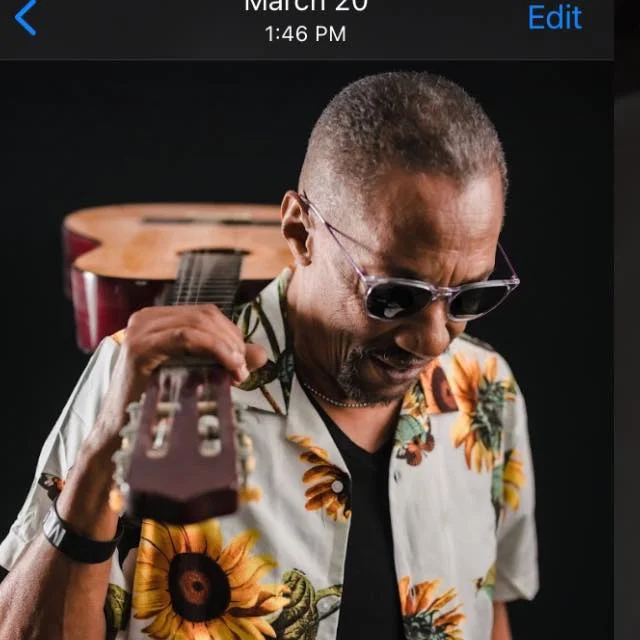
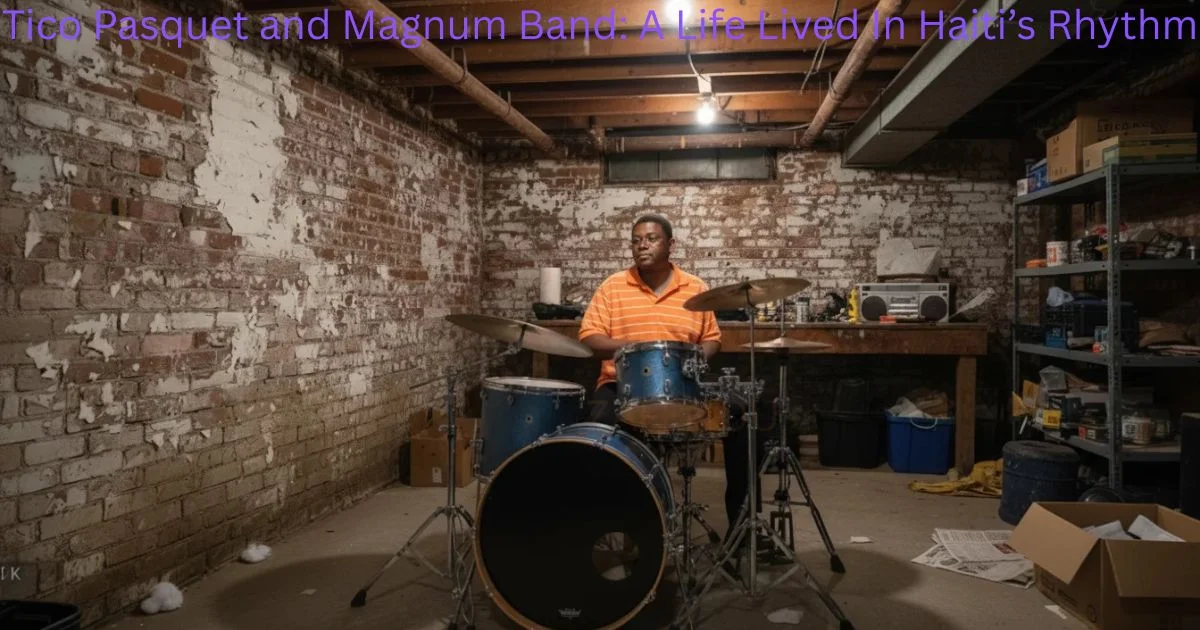
The guitar is often treated as a solo instrument—a tool for ego. In the hands of Dadou Pasquet, it was a tool for architecture.
On November 23, 2025, the world lost a man who didn’t just play music; he engineered a cultural shift. André “Dadou” Pasquet, the enigmatic co-founder of Magnum Band, died at his home in Miami at the age of 72. While the headlines will tell you he succumbed to illness, the history books will record that he succumbed to nothing—his influence is now permanent.
To truly grasp the Dadou Pasquet legacy, we have to look past the accolades and the hit songs. We have to look at the risk. We have to examine the career of a man who famously walked away from the biggest band in the world because he heard a sound in his head that no one else could hear.
The Boy Who Outgrew the Room
Most musicians spend their entire lives chasing the kind of success Dadou Pasquet achieved before he was old enough to vote. By his mid-teens, he was already a fixture in the New York music scene, playing with the likes of Raoul Guillaume.
He was a prodigy, a term often overused but entirely accurate here. When he stepped into Tabou Combo to replace Albert Chancy, he wasn’t just filling a vacancy; he was stepping into the cockpit of a rocket ship. He helped steer that ship to global stardom with hits like “New York City.”
But comfort is the enemy of art. By 1976, Dadou was restless. He was a young man with an old soul, and he felt confined by the commercial success of Tabou. He didn’t just want to make people dance; he wanted to make them listen. In a move that shocked the industry, he walked away. He took his brother, Tico Pasquet—a percussionist of equal ferocity—and founded Magnum Band.
They chose June 24, 1976, for their debut. In Haitian culture, this is the Feast of Saint-Jean, a day of mysticism and power. It was a statement: We are not just a band. We are a force.
“Musique Savante”: The Battle for Respect
If you ask any music historian about the Dadou Pasquet legacy, the conversation inevitably turns to the “Magnum Sound.”
When Magnum Band first emerged, the Haitian music scene didn’t know what to do with them. The rhythms were familiar—the driving Konpa beat was there—but the harmonies were alien. They were dense, jazzy, sophisticated. Critics, perhaps intimidated by the complexity, labeled it “musique savante”—scholarly music. It was a pejorative term, a polite way of saying, “This is too smart for the club.”
Dadou hated the label, not because he rejected intellect, but because he rejected the idea that Haitian music had to be simple to be authentic.
Producer and collaborator Fabrice Rouzier argues that Dadou was actually the ultimate traditionalist. “They called it complex,” Rouzier noted, “but if you stripped away the jazz chords, you found the purest folklore.” Dadou was taking ancient rhythms like Rara and the rural Complainte chants and dressing them in tuxedos. He wasn’t abandoning his roots; he was elevating them. He proved that you could have high art and a high-energy party in the same track.
The Silence and the Storm
There was a duality to Dadou Pasquet that fascinated everyone who worked with him. On stage, he was electric—famous for his headband, his sweat-drenched performances, and his blistering guitar solos.
Offstage, he was a phantom.
Berthony Raphael, who managed Magnum Band for over a decade, describes a man of profound silence. “Dadou didn’t speak just to hear his own voice,” Raphael recalled. “If he was in a room, you might not know it until he picked up an instrument.”
This silence was a form of quality control. He was known for his “fran pale”—his brutal honesty. He was a perfectionist who would stop a session to correct a chord progression that was technically “fine” but emotionally “wrong.” He didn’t care about feelings; he cared about the physics of the sound.
This discipline extended to his mastery of instruments. He wasn’t just a guitarist. He played bass with a funk player’s groove. He played percussion with a folklorist’s touch. In the digital age, he mastered programming, often producing entire albums single-handedly from his home studio. He was a self-contained musical ecosystem.
The Unfinished Symphony: A Patriot in Exile
The most tragic note in the Dadou Pasquet legacy is not musical, but geographical.
Dadou was a patriot in the truest sense. While many artists of his generation assimilated into the American dream, Dadou’s eyes were always fixed on Haiti. His discography reads like a love letter to a troubled nation. Songs like “Libete” (Freedom) and “Okay Cheri” (dedicated to the city of Les Cayes) were anthems of resistance and pride.
In 2011, during a rare trip to Port-au-Prince, the weight of his exile hit him. He confessed to his manager, “It is time to come home. We need to plant Magnum here.” He bought a guitar and left it in the city, a promise that he would return to claim it.
He never did.
Political instability and his subsequent diagnosis with blood cancer kept him in Miami. According to Raphael, this was his great regret. He died in the diaspora, a king who couldn’t return to his castle. That guitar remains in Port-au-Prince, a silent artifact of a dream deferred.
The Final Command
For the last year of his life, Dadou fought his illness with the same privacy he lived his life. He refused to let the public see him weak. He posted videos of himself exercising, playing, and living. He died as he lived: on his own terms, in his own home, surrounded by family.
When the end was near, and he was asked what message he wanted to leave behind, he didn’t offer a philosophical treatise. He gave an instruction.
“Jwe mizik lan.” (Play the music.)
It was a command to his band, his family, and his fans. Don’t mourn in silence. Do not let the silence that he mastered become the silence that defines him.
Why the Dadou Pasquet Legacy Matters Today
Today, as tributes pour in from Martinique, Guadeloupe, France, and every corner of the Caribbean, we are witnessing the impact of a true giant.
Dadou Pasquet paved the way for the modern Haitian sound. Without Magnum Band, there is no Zafem. Without his experiments in fusing genres, the “Nouvelle Génération” of Konpa would sound very different. He taught us that our music is elastic—it can stretch to include Jazz, Rock, Reggae, and Funk without breaking.
The “Mapou” tree has fallen, but the seeds he planted have grown into a forest. The Dadou Pasquet legacy is not a static thing; it is a living, breathing rhythm that continues to evolve.
So, we will listen. We will dance. And we will play the music.
Last Updated on January 15, 2026 by kreyolicious