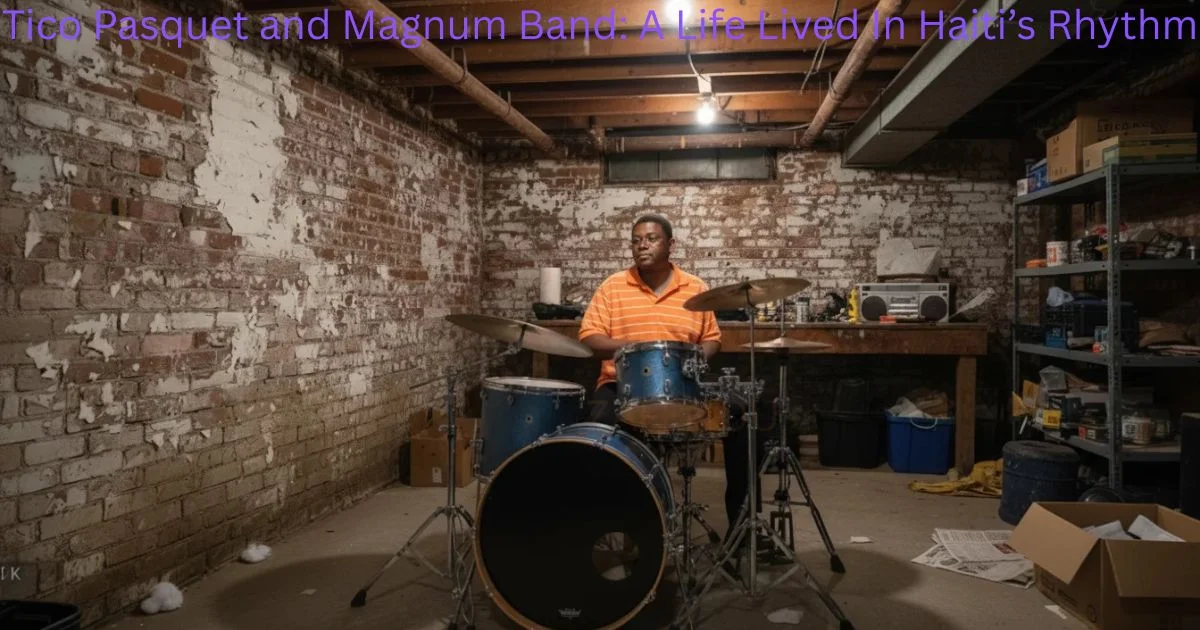
This piece examines guitarist and bandleader Dadou Pasquet’s critique of modern Haitian music, how he engineered Magnum Band’s “Funky Konpa” sound, and why his ideas about unity and listening still matter for today’s listeners.
In conversations about Haitian music, there are talented players, there are celebrated stars, and then there is Dadou Pasquet, co-founder and longtime leader of Magnum Band.
Many fans describe him as more than a performer, seeing in him a kind of musical philosopher who studies how songs are built, how they age, and why some last while others disappear.
Through his reflections on “microwave music,” his carefully constructed “Funky Konpa” blueprint, and his regional vision of “Amagwa,” Pasquet offers a framework for understanding both the strength and fragility of today’s Haitian soundscape.
Who Is Dadou Pasquet In Haitian Music?
André “Dadou” Pasquet is widely recognized as one of the key guitarists, composers, and bandleaders in modern Kompa.
After early work with Tabou Combo, he co-founded Magnum Band with his brother Claude “Tico” Pasquet in Miami in 1976, helping shape a sound that blended traditional Kompa with jazz, funk, blues, and other influences.
Magnum Band’s discography includes landmark releases such as the album “Expérience” in 1979 and “Jehovah” in 1980, records that continue to circulate at parties and in diaspora playlists decades after their release.
The group went on to tour internationally and perform during the 1996 Summer Olympics in Atlanta, a moment that many close to the band consider a career milestone and a global showcase for Haitian music.

The “Microwave Music” Problem
In recent interviews, one of Pasquet’s sharpest critiques is aimed not at the past, but at the present state of the music industry.
He contrasts long-lived albums like “Expérience” and “Jehovah,” which continue to move dance floors decades later, with newer hits that burn bright on social media for a moment and then fade quickly from rotation.
Pasquet points out that many current releases feel like “microwave music” to him, created to be consumed fast, shared widely, and forgotten just as quickly once the algorithm moves on.
He raises a simple but uncomfortable question for artists and fans alike: how many of today’s records explode online, only to lose their impact weeks later when the visual campaign cools down and only the song remains?
For Pasquet, this short lifespan is not just a marketing issue; it is a sign that something deeper has shifted in how music is made, packaged, and consumed.
“We Listen To Music With Our Eyes”
One of Pasquet’s most striking observations is that many listeners now “listen with their eyes” rather than their ears.
He argues that the industry’s focus has tilted heavily toward image, video, and online presentation, sometimes at the expense of melody, arrangement, and musicianship.
In this view, songs are often built around visuals first: choreography that will work on short-form video, outfits that will draw attention, and marketing hooks that can be turned into challenges or memes.
Pasquet does not reject visuals outright, but he warns that when the visual experience becomes more important than what is heard, the result is “empty noise” that may go viral briefly but struggles to stand the test of time.
His comments invite listeners to ask themselves how a song feels when the screen is off, and whether the composition still holds attention without the supporting spectacle.
Deconstructing “Funky Konpa”: More Than A Vibe
Pasquet is also careful to explain that Magnum Band’s “Funky Konpa” was never just a nickname or marketing trick.
He describes it as a deliberate fusion designed to help international audiences connect with Haitian music without losing the core pulse of Kompa.
In his breakdown, the rhythm section works like a clock that keeps Haitian identity at the center of the sound.
The drums act as the hour hand, marking the main movements of the groove; the tanbou or congas function as the minute hand, adding detail and depth; and the additional percussion behaves like the second hand, bringing constant motion and fine-grained accents.
Once this “Konpa clock” is steady and precise, Pasquet layers in funk, jazz, and blues elements—particularly through guitar voicings and harmonic choices—to create a hybrid feel that still respects the foundational beat.

This approach helped Magnum Band stand out at international festivals and large events, where audiences might not speak Haitian Creole but could immediately recognize the sophistication and energy of the arrangements.
Magnum Band On The World Stage
By the mid-1990s, Magnum Band’s methodical work and unique sound allowed the group to appear on major stages outside Haiti.
Among the most frequently cited milestones is the band’s participation in the 1996 Summer Olympics in Atlanta, where they performed multiple times during the Games and brought Kompa to a global, multisport audience.
Accounts of this period often mention the band sharing festival bills with well-known international acts, which underscored that Haitian groups could hold their own in diverse lineups.
For many fans and observers, these appearances confirmed that carefully crafted Haitian music could travel far beyond diaspora clubs and become part of broader world-music conversations.
The “Amagwa” Philosophy Of Caribbean Unity
Another important aspect of Pasquet’s outlook is his resistance to strict borders inside the Caribbean.
He has used the term “Amagwa” to evoke a symbolic space linking Haiti with territories such as Martinique and Guadeloupe, imagining them not as isolated scenes but as parts of a deeper cultural continuum.

When Pasquet calls out “Amagwa” on stage, it functions as more than a catchy shout; it is a reminder that Haitian rhythms, Creole languages, and shared histories flow across islands and coasts.
This idea lines up with the way many tributes describe him—as a bridge between Haiti and the wider Francophone Caribbean, using a guitar, a voice, and a band to connect communities that have long influenced one another.
For listeners, “Amagwa” becomes a way of hearing the music not just as national or local, but as part of a broader Caribbean conversation.
A Somber View Of Haiti’s Present
Any portrait of Pasquet also has to acknowledge his sober reflections on Haiti’s current crisis and his own life in the diaspora.
Living in Florida, he has spoken openly about feeling “rich in music” and deep love for his homeland, yet limited in material resources and physically distant from the country that shaped him.
In his commentary, he suggests that Haiti’s founding motto, “L’union fait la force” (Unity makes strength), feels inverted today, as violence and force often seem to determine who can move, work, and even gather for music.
These reflections do not read as detached analysis; they carry the weight of someone who has spent decades putting Haiti on stages abroad while watching instability at home make it harder for artists and families to thrive.
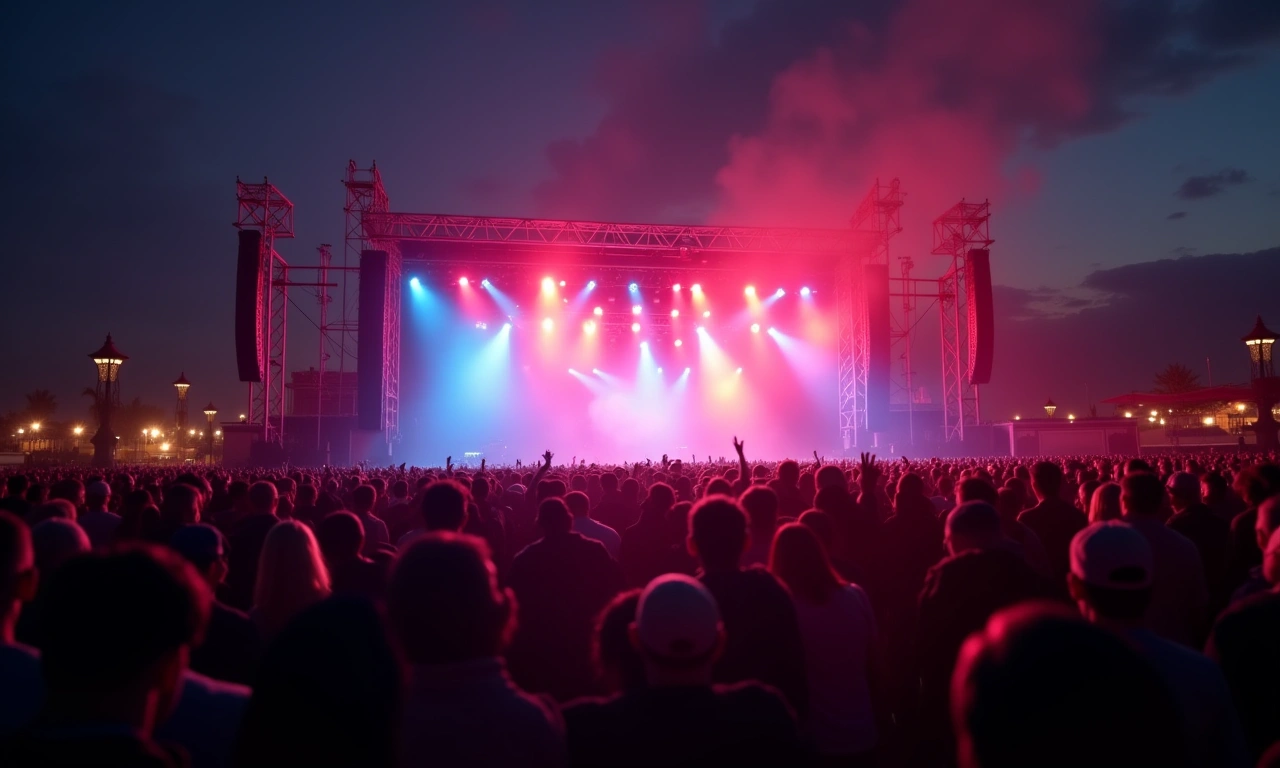
At the same time, he continues to perform under banners such as “Dadou and Friends,” sometimes in stripped-down acoustic formats, sometimes with full brass sections, insisting that the music must continue even amid uncertainty.
Why Seeing Dadou Live Still Matters
For those who encounter Pasquet on stage, the experience is often described as part concert, part masterclass.
Setlists may draw from Magnum Band favorites alongside more intimate arrangements, giving audiences a chance to feel how the same song can live in both full-band and acoustic settings.
Beyond the notes themselves, listeners come away with a clearer sense of how a lifelong musician thinks about structure, discipline, and respect for the audience’s ear.
In an era of fast-moving trends and disposable content, Pasquet’s focus on durability, craft, and intentional listening offers a different model for both artists and fans who want more from the music they love.
What Makes This Guide Different
This article is designed to help readers quickly understand not just who Dadou Pasquet is, but how he thinks about music and why his ideas still resonate.
- It connects concrete discography milestones and performance history with Pasquet’s own theories about rhythm, sound, and listening habits.
- It explains “Funky Konpa” using accessible metaphors like the “Konpa clock,” making technical musical concepts easier to grasp for non-musicians.
- It places Pasquet’s work inside a broader Caribbean context, highlighting his “Amagwa” vision of regional unity and cultural exchange.
- It balances admiration with careful wording, distinguishing verified historical details from interpretive commentary and personal reflections reported in interviews and tributes.
FAQ About Dadou Pasquet And Funky Konpa
What is “Funky Konpa” in simple terms?
“Funky Konpa” is a nickname for the way Magnum Band blends traditional Kompa rhythms with elements from funk, jazz, blues, and related genres.
Rather than replacing the Kompa foundation, it adds new harmonic colors and grooves on top of a classic rhythmic structure.
Why do older Magnum Band songs still feel current?
Older Magnum Band releases are built on tight arrangements, strong melodies, and carefully layered rhythm parts that were designed to hold up over time.
Because the focus was on musical durability rather than just short-term trends, many listeners feel these tracks still sound fresh in parties and live sets.
Did Magnum Band really perform at the 1996 Atlanta Olympics?
Yes, public records and multiple accounts confirm that Magnum Band performed during the 1996 Summer Olympics in Atlanta.
Descriptions of that period highlight the Olympics as a major career milestone and a key moment in bringing Haitian Kompa to wider international audiences.
What does “Amagwa” represent in Pasquet’s work?
“Amagwa” is a term Pasquet uses to symbolically link Haiti with other Francophone Caribbean territories such as Martinique and Guadeloupe.
It represents his belief that these places share musical roots, histories, and cultural currents that should be recognized and celebrated together.
How does Pasquet view today’s music industry?
Pasquet often expresses concern that modern music is too focused on visuals and fast consumption, leading to songs that peak quickly and then vanish.
He urges both creators and fans to pay more attention to composition, arrangement, and sound itself, so that songs can retain their power even after the marketing cycle ends.
Why is his perspective important for younger artists?
Younger artists can learn from Pasquet’s insistence on rhythmical precision, harmonic depth, and respect for the listener’s time and ear.
His career shows that it is possible to innovate, experiment, and reach international stages without abandoning the core feel of Haitian music.
Editorial Note
This article draws on publicly available biographical notes, discography entries, tribute pieces, and interviews about Dadou Pasquet and Magnum Band, combined with reported remarks on themes like “Funky Konpa,” “Amagwa,” and “listening with our eyes.”
Some sections reflect how journalists, fans, and collaborators describe Pasquet’s impact, and should be read as informed interpretation rather than official statements from the artist.
Readers who notice inaccuracies, missing context, or new developments in his life and work are invited to share corrections or additional information so this portrait can remain as accurate and respectful as possible.
Last Updated on January 15, 2026 by kreyolicious