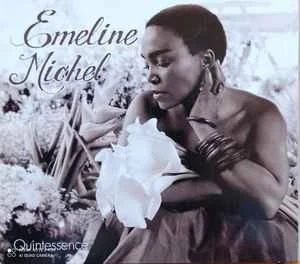
Emeline Michel’s 2013 album Quintessence distills the artistic vision of one of Haiti’s premier contemporary vocalists. Over 12 tracks, Michel explores themes of domestic violence, resilient love, national trauma, and personal renewal—collaborating with pianist Yayoi Ikawa, acclaimed Haitian American writer Edwidge Danticat, and lyricist Jean-Claude Martineau.
This review examines six featured songs to understand how Michel has evolved as a songwriter and how she refines the emotional and social consciousness that defines her career.
Album Essentials
Released in February 2013, Quintessence comprises 12 songs with a runtime of approximately 55 minutes. The album features Michel as writer and co-producer on multiple tracks, with producer Fabrice Rouzier returning after their collaboration on “Flanm,” a widely recognized milestone in Michel’s career.
The album’s language distribution reflects Michel’s global fanbase: the majority of songs are in Haitian Creole, with two songs in French (“Ton Yanvalou” among them) and one in English (“Freedom Bound”).
The Five Elements of Quintessence
Michel opens the album with “Infini,” but the thematic heart emerges in the early tracks: “Mèsi Lavi” (Thank You Life), a song of gratitude, leads with themes of thankfulness before moving into more turbulent emotional territory. This sequencing is deliberate—expressing gratitude first rather than as an afterthought reflects Michel’s worldview that appreciation grounds all other human responses.
“Djannie” addresses domestic and relationship violence—a rarely examined theme in Haitian popular music. Over a forlorn vocal delivery, Michel counsels a woman named Djannie, warning her that love cycles of violence are not love at all. The song stands as a powerful social statement: while “Pa Leve Men Sou Li” (Do Not Put Your Hands on Her) exists in the Haitian music canon, its dance-floor presentation sometimes obscures its message. In “Djannie,” Michel ensures her lyrics remain central.
The song unfolds in two emotional registers. First, Michel speaks as mentor: “Love means honor, love means respect / Open your eyes.” Later, she anticipates the victim’s rationalizations: “Once, twice, but this won’t be the last time / Someone who hits you, who makes you bleed, then comes around with flowers / Does not love you.” The song preaches that survival is self-love.

“M Pa Ka Dòmi” (I Can’t Sleep) pivots to romantic self-sabotage—loving without reciprocity, handing one’s heart to someone careless. Michel sings, “He has my heart in his pocket,” a line that captures the loss of autonomy. The song pairs her vocal with Jean-Guy René on percussion and Peter Stan on accordion, building a bluesy, introspective soundscape that evokes New Orleans jazz and early-20th-century Haiti when St. Domingue refugees brought musical traditions to Louisiana.
Another lyric—”Fire’s set on my sugar cane field / And he doesn’t promise he’ll be back”—employs a historical metaphor. Sugar cane was among Haiti’s most valuable colonial exports; in Michel’s metaphor, a woman’s “sugar cane field” is her identity, agency, and future. The song speaks to every woman who has loved recklessly and abandoned her own boundaries.

“M Pa Ka Dòmi” marks Michel’s first collaboration with producer Fabrice Rouzier in years. On this track, Michel serves as writer and producer while Rouzier handles arrangements; they split production duties on two other songs, “Timoun” and “Pran Menm.” The reunion demonstrates mutual artistic trust at a high level.
Resilience and Renewal
“Dawn” features an intro by award-winning author Edwidge Danticat. The chorus carries the flair of a church sermon, mourning Haiti’s persistent tragedies and loss—including the 2010 earthquake. Yet the song ultimately urges Haitians to summon inner strength and move forward. “Timoun” echoes this message of hope, reinforced by an enthusiastic children’s chorus that lifts the atmosphere beyond grief.

“Yon Mirak” (A Miracle), positioned later in the album, continues this theme while introducing disillusionment. Michel sings, “Too many of the blind are leading / No wonder we can’t see where we’re going.” This critique of Haiti’s leadership and vision coexists with the album’s persistent thread of hope.
“Pran Men Mwen” (Take Hold My Hand), featuring saxophonist Jowee Omicil, represents romantic redemption. The song parallels Michel’s earlier composition “Pa Gen Manti Nan Sa” (There’s No Doubt), celebrating drama-free love and companionship.
Yet Michel hints at past turbulence: “I’m a volcano that’s about to wake up.” The song reimagines a couple who once separated, now mature and wise, ready to try again.

The lyric “It’s another chapter / We’re about to begin / Take your chance / I’m not in a hurry / I’m taking my time” acknowledges past immaturity and impulsiveness. Two lovers can finally pursue a healthier, deeper relationship.
“Kè M Ap Sote” (My Heart’s Skipping), later on the album, deepens this romantic narrative. It represents the final stage of love—grown-up companionship rather than youthful passion. Michel croons about cooking for a man (“The food is done”) as an act of genuine love and nourishment, rejecting any notion that such care diminishes her feminism. This song celebrates intentional love built on respect and daily devotion.
Lyrical Richness and Musical Heritage
“Terre Mouillée” showcases Michel’s lullaby voice, lending gentleness to lyrics by Ina Césaire, the daughter of celebrated Martinique writer Aimé Césaire. The song paints an image of a chapel in quiet woods and the serenity of life—a respite from the emotional intensity of earlier tracks.
Quintessence combines the musicianship of Michel’s 2004 album Rasin Kreyol (Creole Roots), the lyrical sophistication of her 2007 album Reine de Coeur (Queen of Hearts), and the breadth of her Best Of collection. Yet it stands as its own statement—an album that feels both rootedly Haitian and open to the world’s musical languages.
What Makes This Guide Different
- Song-by-song lyrical analysis: Rather than summarizing tracks, this review translates key lyrics and explores how Michel uses metaphor (sugar cane as female agency, hearts in pockets as loss of autonomy) to deepen meaning.
- Thematic coherence across the album: The review traces a journey from gratitude through struggle to resilience and mature love, showing how Quintessence functions as a complete artistic statement, not merely a collection of singles.
- Social and historical context: The review situates Michel’s songs about domestic violence, unreciprocated love, and national trauma within both Haitian popular music history and Michel’s own career arc, illustrating her evolution as a conscious artist.
- Producer and collaborator insights: Acknowledging Fabrice Rouzier’s return, Edwidge Danticat’s involvement, and other musicians helps readers understand how Quintessence reflects a moment in Haiti’s artistic community.
FAQ
What is the album’s release date and format?
Quintessence was released in February 2013 and contains 12 songs with a runtime of approximately 55 minutes. It is available on major streaming platforms including Apple Music, Spotify, and YouTube Music, as well as through physical retailers and the artist’s official website.
Who are the main collaborators on Quintessence?
Key collaborators include pianist Yayoi Ikawa (who performs on seven songs), saxophonist Jowee Omicil, writer Edwidge Danticat (who contributes to “Dawn”), lyricist Jean-Claude Martineau, and producer Fabrice Rouzier. Additional musicians include Dominic James, Kali, Makarios Cesaire, Monvelyno Alexis, Dener Ceide, Frantz Benjamin, Jean-Amedé Caze, Boulot Valcourt, Daniel Bernard Roumain, and Nicky Christ.
Is this Emeline Michel’s first or best album?
No. Michel released her first album, Douvanjou Ka Leve (May the Sun Rise), in 1987. Since then, she has released numerous albums including Ban’m Pasé (1996), Rasin Kreyol (2004), and Reine de Coeur (2007).
Quintessence represents a mature phase of her career, synthesizing earlier musical directions while advancing her themes of social consciousness and emotional depth. Listeners often debate which album is her “best”—Quintessence ranks highly but does not universally supersede earlier work.
What languages are used on the album?
Most songs are in Haitian Creole, reflecting the primary language of Michel’s audience and creative voice. Two songs are in French (“Ton Yanvalou” and others), and one song is in English (“Freedom Bound”), reflecting Michel’s efforts to reach English-language audiences while maintaining her roots.
How does “Djannie” compare to other songs about violence in Haitian music?
“Djannie” stands apart because Michel places her message—love requires respect and self-preservation—at the emotional center of the song. The melody does not overshadow the lyrics, and Michel’s vocal delivery emphasizes the urgency of her counsel.
While other Haitian artists have addressed domestic violence (notably in “Pa Leve Men Sou Li” / “Do Not Put Your Hands on Her”), “Djannie” integrates social critique with intimate, conversational storytelling.
What is the significance of Fabrice Rouzier’s return as producer?
Rouzier previously produced “Flanm,” a widely recognized milestone in Michel’s career. His return on Quintessence—where he handles arrangements while Michel and others write and produce—signals artistic continuity and mutual respect. The collaboration results in several standout tracks, including “M Pa Ka Dòmi,” and suggests that Michel and Rouzier share a deep understanding of each other’s creative intentions.
Editorial Note
This review is based on analysis of the album’s official tracklist, lyrical content, and artist discography verified through Apple Music, Spotify, the official Emeline Michel website, and documented interviews with collaborators. Song lyrics have been translated from Haitian Creole and French into English to preserve meaning while acknowledging that music is language—and that some nuances are lost in translation. Historical context regarding Haiti’s colonial economy, Aimé Césaire’s intellectual legacy, and the careers of Michel’s collaborators draws on published biographical sources and interviews. Readers with corrections or additional context are encouraged to share them in the comments section below.
Last Updated on January 15, 2026 by kreyolicious