Carlton Rara is a Franco-Haitian singer-songwriter and percussionist whose voice—shaped by dual heritage and deep study of world music—blends Caribbean rhythms, jazz idioms, and philosophical introspection into emotionally transparent performances.
Born in France in 1975 to a Haitian mother and French father, Carlton made his stage debut in 2005 and has since toured extensively across Europe, Africa, and the Caribbean, building a reputation as an artist who refuses simplistic categorization.
His work explores how distinct cultural identities can merge into something entirely new, not a compromise between parts but a unified whole with its own unique voice.
Reframing Dual Identity: Beyond “Double Consciousness”
Carlton’s parents married in New York before settling in France, a geography of displacement that would shape his later artistic exploration of belonging. Both parents spoke Creole alongside French, exposing him early to linguistic and cultural fluidity. When asked about growing up with dual nationality, Carlton resisted the language of fragmentation or inner conflict.
Instead, he offered a chromatic metaphor: “If you mix different colors like yellow and blue for instance, you can expect to get some sort of green and that green you get is an absolutely new and unique color. It is not a remnant of yellow or blue. It’s just green—with a specific relationship to the world.”
This philosophy extended beyond aesthetics into his lived experience. Rather than viewing identity through the lens of how others perceived him, Carlton emphasized his own interpretation of belonging: “It seems to be easier for a community to recognize similarities or differences with an individual than for an individual to identify what he shares or does not share with a community.
Anyway, you often feel misunderstood.”
The Rara Tradition and the Choice of a Stage Name
Carlton’s stage name references one of Haiti’s most significant cultural traditions. Rara is processional street music performed during the Lenten season, featuring bamboo horns called vaksin, metal horns (konè), and drums. Rara bands march through Haitian neighborhoods in rhythmically complex processions that blend Vodou spirituality with community celebration and, historically, have served as vehicles for political and social expression.

Carlton chose the name as a deliberate homage: “Rara is a strong and beautiful tradition in Haiti. These marching bands are just amazing. It was just a way to pay tribute to the magic it inspired in me.” His birth name, Carl, lacked sufficient resonance for performance. Carlton felt right—a name that would carry the weight of his chosen artistic identity while honoring Haitian heritage.
Caribbean Literature and Artistic Awakening
Carlton’s connection to literature came through his older brother Guy Viarre, a Franco-Haitian writer who introduced him to two foundational Caribbean voices. Aimé Césaire (1913–2008) was a Martinique poet and politician who co-founded the Négritude movement, an ideological and literary project reclaiming Black cultural identity and rejecting colonial European frameworks.
Frankétienne (1936–2025), recognized as the “father of Haitian letters,” wrote novels, plays, and poetry in both French and Haitian Creole, including *Dézafi*, the first novel written entirely in Haitian Creole.
Carlton has since created concert performances centered on these writers’ work, integrating their texts with his own music. “My brother passed away many years ago,” Carlton reflected, “but he made me understand that literature takes an active part in changing the world. We should never stand too far or too long away from a book.
Caribbean literature is just incredibly rich.”

Musical Influences: A Philosophy of Artistic Freedom
Carlton credits multiple artists as foundational to his approach, each representing a distinct dimension of artistic mastery.
Taj Mahal: Mastery and Freedom
Taj Mahal, the American blues musician born in 1942, stands foremost among Carlton’s influences.
Taj mastered guitar, piano, banjo, harmonica, and numerous world instruments, earning recognition for his ability to expand blues into global musical territory. “Besides the fact he’s mastered several instruments in a very unique way, he can also sing,” Carlton explained. “His true brilliance emerges in his ability to be an inventive—and most of all—a free individual.”
Dizzy Gillespie: Innovation in Composition
Dizzy Gillespie, the jazz trumpet pioneer who co-created bebop in the 1940s, represents another foundational influence. Gillespie was among the first musicians to systematically integrate Afro-Cuban, Caribbean, and Brazilian rhythms into jazz composition, creating a new musical language that influenced generations of instrumentalists.
Carlton described Gillespie’s contribution as essential: “He progressively introduced extra jazz music to his compositions and was one of the most creative composers in the history of jazz.”

Michael Jackson: Universal Expression
Michael Jackson, however, holds the deepest influence. Carlton was part of the generation that grew up with Jackson’s music and visual aesthetic throughout the 1980s and 1990s. “I have lived obsessively with his music, moves, and image on my mind for decades,” Carlton said. “Michael Jackson achieved something universal out of personal creation, a new language that speaks to our heart, our body, our mind and our soul at the same time and throughout the ages.
He is probably the artist that influenced me most.”
Peyi Blue: Necessity as Origin
Carlton’s debut album, *Peyi Blue*, released in 2009 and reissued in 2013, emerged from practical necessity rather than artistic planning. “It was basically made by instinct, driven by the necessity to create something to support and promote live acts,” Carlton recounted. “Putting things on a recorded format was not something I was used to.”
The album was produced with limited resources, yielding a sound that Carlton described frankly: “It was produced with very humble means—which granted it with as many defects as qualities. It was a way to have something to begin with.” Despite modest production circumstances, the album proved surprisingly successful, creating both validation and anxiety for his follow-up project.

Home: Deliberate Craft and Artistic Identity
Released in 2012, *Home* represented a more deliberate studio effort. “When recording *Home*, I was not thinking pretty much of how the album would be received—that can give you an idea of how unconscious and thoughtless I can be,” Carlton admitted.
Yet he acknowledged the pressure inherent in a second album: “There was a real risk to get people disappointed by bringing something they could judge as being worse.”
Some songs on *Home* had been composed years earlier, long before *Peyi Blue*’s release. Carlton worked in a more formal production environment, developing his craft while remaining intentional about artistic identity: “I try to cultivate my own style, my own inventions.”
A recurring frustration emerged during this period. “I have been much more presented as a musician of Haitian origin than as just a musician,” Carlton noted with subtle frustration. “People may find Haiti as a real fascinating and eerie place for some reason. This is an ethnicizing way to look at the world. I am at peace with what I am, no need to be even proud of it. I am just what I am.”
“Dlo Koule”: Emotion as Natural Emergence
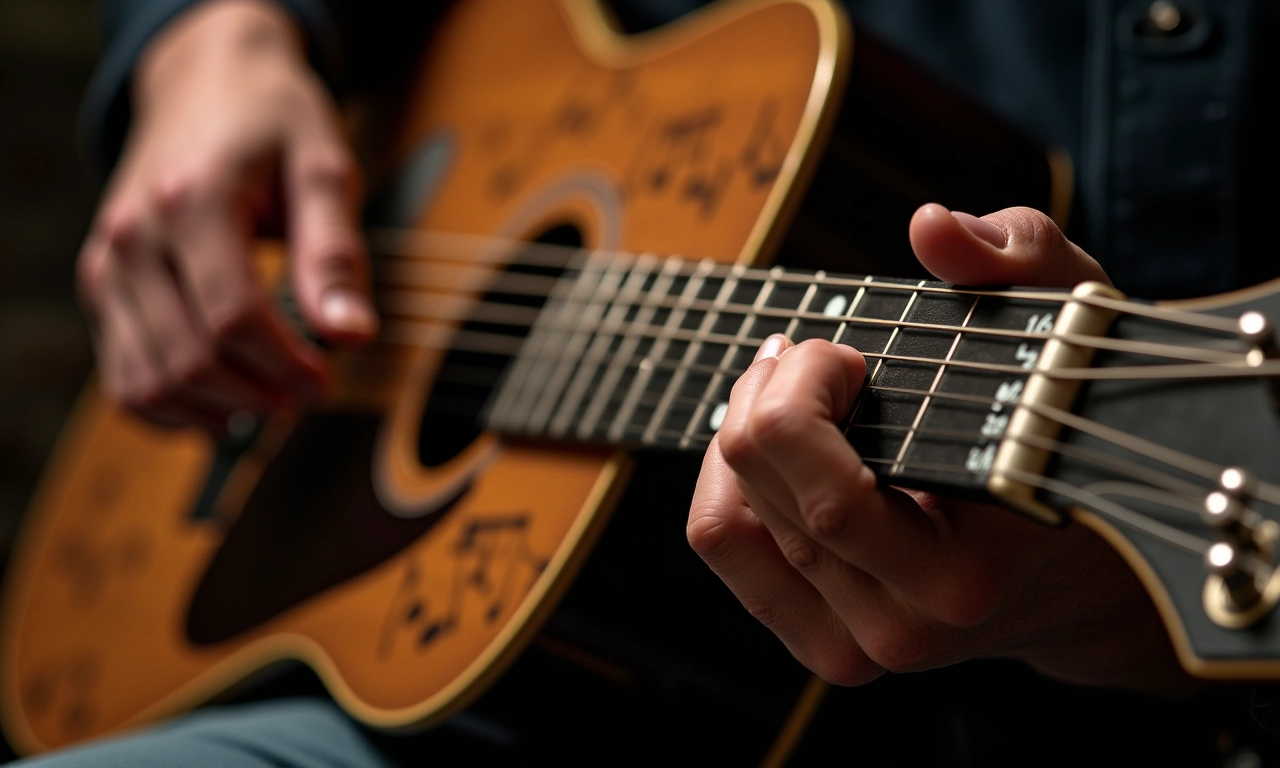
The song “Dlo Koule” (appearing on *Home*) exemplifies Carlton’s approach to emotional authenticity. When asked how he brings such intensity to his vocal performances, Carlton explained that emotion is not manufactured but emerges naturally from the material itself: “We did a single take to record ‘Dlo Koule’, we did not even think about trying to take one more.
It’s a sad song talking about a sad story and I felt myself then as sad as the song is.”
He reflected on sadness itself as a form of purification: “But sadness and sorrow that often drive people to tears are also some sort of purification as natural spring water can be. So, I don’t need to bring emotion, emotion emerges by itself when it is time.”
Live Performance and Career Highlights
Carlton’s most memorable performance occurred in Martinique at a Christian school before an audience of five hundred fifteen-year-old girls. “They went quite crazy during the show and were rather hysterical after,” he recalled. “People from the West Indies are fond of music.” This experience encapsulates his philosophy: music that speaks to lived experience and universal emotion transcends age and context.

His last documented visit to Haiti was in December 2012 for a touring engagement, though his artistic practice remains rooted in Caribbean memory and literary tradition.
What Makes This Profile Different
- Emphasis on philosophy over biography: Rather than chronological career events, this profile centers Carlton’s coherent artistic philosophy—identity as fusion, emotion as emergence, artistic freedom as essential.
- Literary and musical context: Connects Carlton’s work to specific Caribbean literary movements (Négritude, Spiralism) and jazz innovations (bebop, Afro-Cuban jazz) rather than treating influences in isolation.
- Direct artist voice: Heavy use of Carlton’s own quotes ensures authenticity; interpretations are grounded in his stated artistic concerns rather than external critical frameworks.
- Resistance to reductive labeling: Explicitly addresses Carlton’s frustration with being categorized purely as “Haitian music,” centering his perspective on artistic identity beyond ethnographic framing.
Artistic Philosophy and Advice for Emerging Musicians
When asked about guidance for aspiring musicians, Carlton emphasized freedom and intentionality: “Be yourself. Don’t forget to be free and to cultivate your freedom as the most precious thing you can have. Don’t forget to be inventive or re-inventive.
Working is the least thing you can do. Try your best. But you have to know that keys of success are not only in your hands—you have to be lucky—but luck can be a science too.”
Regarding vocal care, he acknowledged room for improvement: “I really have to improve in the area of caring for my voice and being fit. But, I go jogging twice a week without forgetting to put a scarf round my neck.” His approach reflects practicality over perfectionism—attentive without obsessive.
Looking Forward
When asked about his plans, Carlton kept perspective: “A life to live…many musical projects, drama, cinema…and even more surprising, a third album.” This stance—acknowledging artistic ambition while refusing to be defined solely by it—captures his philosophy.
Art is one expression among many; living fully encompasses music but is not consumed by it. For Carlton, the goal remains constant: to create work that refuses simple categorization, that honors tradition while remaining inventive, and that speaks to the universal human experience beneath cultural particularity.
Editorial Note
This profile is based on a recorded interview with Carlton Rara, supplemented by verification of biographical and cultural references. Information about Aimé Césaire and the Négritude movement derives from academic and biographical sources.
Frankétienne’s biographical details and literary significance were verified through recent obituaries, literary archives, and UNESCO records. The Rara tradition was verified through ethnomusicological documentation and cultural scholarship. Carlton’s album release dates and discography were confirmed through Spotify, Apple Music, and official music databases.
All musical influences—Taj Mahal, Dizzy Gillespie, Michael Jackson—were verified against established biographical and music historical sources. Readers who have additional documentation about Carlton’s performances or family history are encouraged to contact the editorial team.
Last Updated on January 15, 2026 by kreyolicious